

Florida After Trump and DeSantis: A Political Realignment Complete
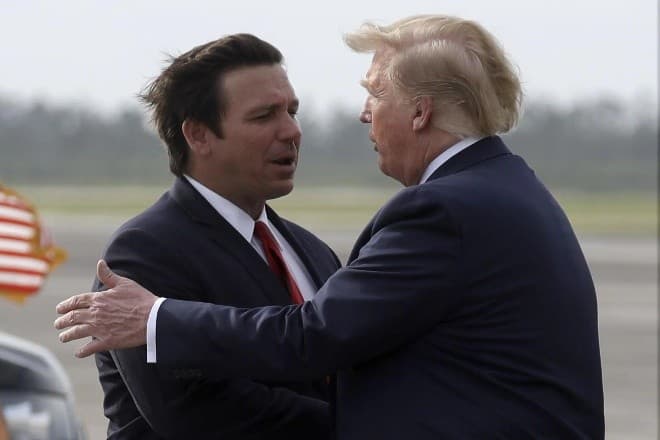
From 1964 through 2016, Florida was one of the largest and most important swing states, backing the winning presidential candidate in every election except 1992. Since President Trump’s 2016 victory and Gov. Ron DeSantis’ rise in 2018, the state has undergone a rapid political realignment, shifting decisively to the right and now polling as a more reliable state for Republicans heading into the midterms than Texas.
That shift is reflected in Emerson’s March 29-31 gubernatorial and Senate poll. In a head-to-head matchup between Republican front-runner Rep. Byron Donalds and Democrat David Jolly, who previously served as a Republican representative before leaving the party in 2018, Donalds leads by 5 points. Against Orange County Mayor Jerry Demings, who trails Jolly in the primary, Donalds leads by 9 points.
Though much has been made of the Republican primary in the governor’s race, Donalds is overwhelmingly favored. The poll found that 46% of Republicans support Donalds, while only 4% support Lt. Gov. Jay Collins and 4% support James Fishback, who has made a stir on social media over the past month by criticizing not only Donalds but also the president on the Iran war. Despite the social media buzz, betting markets align with the primary polling: Fishback has just a 6% chance of winning the primary, down from 25% at its peak in December, while Donalds holds an 89% chance.
In the Senate special election to fill Secretary of State Marco Rubio’s seat, Ashley Moody, who was appointed by DeSantis to hold the seat until the special election, leads all of her potential Democratic opponents. Against former National Security Council Director for European Affairs Alex Vindman, she leads by 8 points, and against state Rep. Angela Nixon, Moody leads by 11 points.
These polls indicate that keeping the state red in November will not be much of a challenge, despite national polling heavily favoring Democrats in 2026, where they hold a 6-point lead on the Generic Congressional Ballot. Other red-leaning states like Texas are showing signs of Democratic overperformance, with potential Republican Senate candidates John Cornyn and Ken Paxton leading Democratic opponent James Talarico by only 2 and 1 point respectively, in the RealClearPolitics Polling Average.
This Sunshine State transformation has occurred in just six years. In 2018, DeSantis won the state by only 0.4 points, and in 2016 Trump carried it by 1.2 points. After Florida was among the first states to reopen following COVID-19 restrictions, an influx of Republican-leaning voters moved to the state, while the state’s policies themselves grew increasingly popular, accelerating GOP gains. Despite President Biden winning the national popular vote by 4.5 points in 2020, Trump carried Florida by 3.3 points. The Republican advantage expanded further in the 2022 gubernatorial election and the 2024 presidential election, when DeSantis won by 19.5 points and Trump by 13.1 points.
If the polling leads in the Senate and gubernatorial races hold through November without DeSantis or Trump on the ballot, Republican success in transforming the former swing state into a Republican stronghold will be complete.
State of Union
.